A sheet of handmade paper starts as a suspension of fibers in water, not as a flat surface waiting to be decorated. The maker’s task is to gather those fibers into an even layer, then manage the water that holds them apart. That sequence connects a delicate object on a desk to practical knowledge about materials, tools, and drying conditions.
Gathering the Fibers
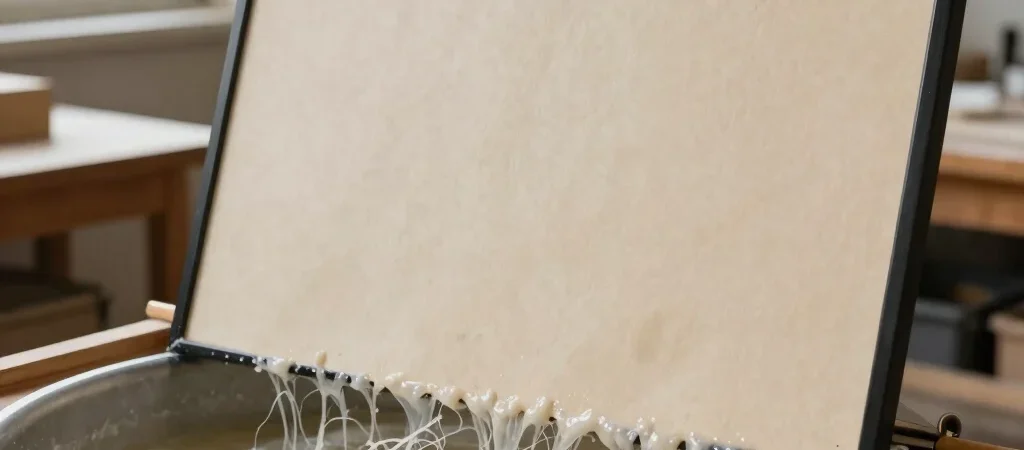
In a traditional hand process, a mould with a screen is dipped into a vat of pulp and lifted so water drains away. A controlled shake helps distribute the fibers across the screen, though the precise movement and equipment can vary between workshops and methods. The wet sheet is still fragile at this stage, and small differences in handling can affect its texture and thickness.
From Wet Sheet to Surface
The sheet is transferred from the mould, pressed to remove more water, and dried. Pressing is not merely a pause between making and finishing: it changes how the sheet holds together and how its surface feels. The tools and exact order of operations differ, so a demonstration or written account should be read on its own terms rather than treated as a universal recipe.
Look for the Knowledge
When exploring paper-making heritage in the Périgord, pay attention to the working sequence as well as the finished sheet. Ask what the vat, screen, press, and drying space each contribute, and which parts of a process are documented for a particular place. This is a more useful way to meet craft history than treating handmade paper as a picturesque object detached from labor.