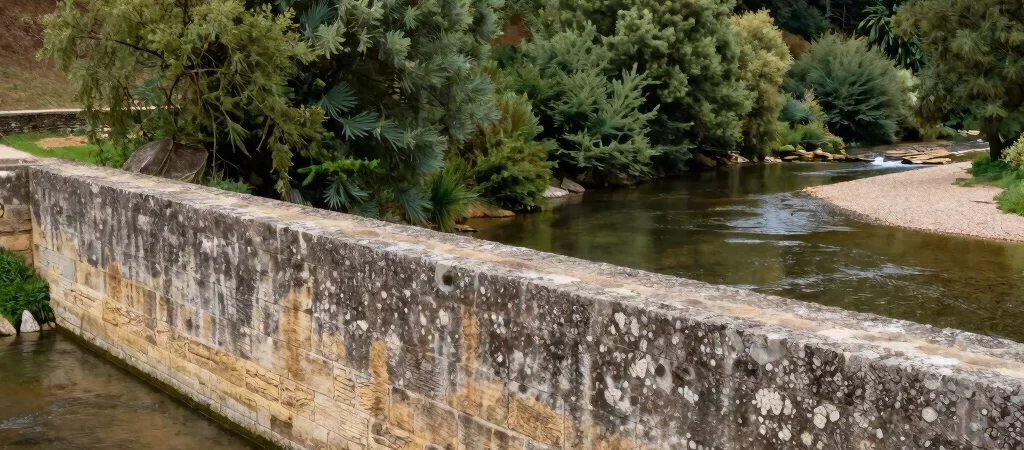
A low wall beside a stream can seem unremarkable until you ask what it did. In an industrial landscape, water was not simply scenery: its route, level, and flow could shape where work happened and how a site was arranged. The first useful question is not “What famous ruin is this?” but “What relationship between water and work can I actually see?”
Start With the Water
Look for changes in the bank, channels, stonework, or openings that might indicate how water was directed. Treat each feature as a clue, not a conclusion; later repairs and natural changes can complicate what appears straightforward. A map, a site description, or a dated photograph can help test an idea before it hardens into a story.
Buildings Were Part of Systems
A former forge, mill, or paper works makes more sense when considered alongside its approaches, working spaces, and connection to the river. The building alone rarely explains the whole process. Even a surviving doorway or unusually placed wall may invite a better question about movement of materials, people, or water than a confident claim about exactly what happened there.
Keep Evidence in View
In the Périgord, industrial heritage belongs to a wider rural landscape of rivers, roads, fields, and settlements. Some traces are legible; others need documentary support, and some may remain uncertain. When you visit, note what you observed separately from what a guide, archive, or local account establishes. That small distinction makes a walk richer—and the history more trustworthy.